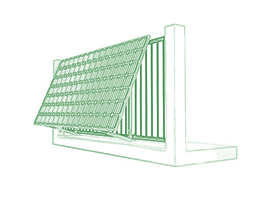
Ante el contexto de la transformación de la estructura energética mundial, los sistemas fotovoltaicos en tejados se han convertido en una opción popular para hogares y empresas debido a sus ventajas ambientales y económicas. Sin embargo, muchos propietarios y administradores de edificios suelen tener una preocupación durante la fase inicial de evaluación: ¿La instalación depaneles solares dañará mi techo? ¿Aumentará la carga sobre el techo e incluso afectará la seguridad de la vivienda? Estas preocupaciones son en realidad razonables, ya que el techo es el componente más crítico para proteger el edificio. Una instalación incorrecta podría tener consecuencias graves. Por lo tanto, antes de decidir si instalar energía solar, comprender los detalles y precauciones pertinentes puede ayudar a tomar una decisión adecuada.
En primer lugar, debemos conocer varias razones comunes de los daños en el techo:
① Instalación no profesional
Una perforación no profesional puede provocar filtraciones de agua, una distribución desigual de la carga de los soportes instalados o que los cables presionen materiales débiles del techo, todo lo cual puede dañar directamente el edificio.
② Capacidad de carga insuficiente del techo
El peso del sistema fotovoltaico es de 30-50 kilogramos por metro cuadrado. La instalación a largo plazo de sistemas fotovoltaicos en techos con capacidad de carga insuficiente puede causar deformación del techo.
③ Tratamiento impermeabilizante inadecuado
Una protección impermeabilizante insuficiente durante la perforación necesaria del techo.
④ Falta de mantenimiento y envejecimiento natural
La erosión causada por la luz solar y el agua de lluvia puede resaltar indirectamente la oxidación de los soportes y el daño de los selladores, poniendo así en peligro la seguridad del techo.
No es necesario preocuparse excesivamente por la situación mencionada.Cuando la capacidad de carga del techo es adecuada, adoptar el tratamiento impermeabilizante correcto o elegir un diseño que no penetre la capa impermeable durante la instalación puede reducir eficazmente el riesgo de filtraciones. A continuación se presentan varios factores a los que se debe prestar atención :
① Instalación en techo inclinado:
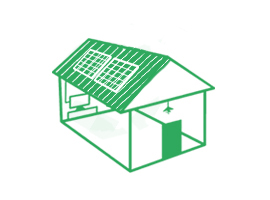
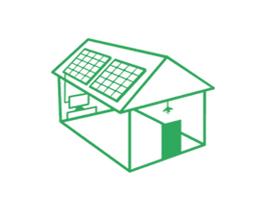
Los techos inclinados se utilizan habitualmente en edificios residenciales, y al instalar sistemas solares, normalmente se emplean soportes o fijaciones para asegurar los paneles a lo largo del plano del techo.
Atención: Una perforación y sellado inadecuados durante la instalación pueden provocar la infiltración de agua de lluvia. Además, la presión prolongada del sistema solar puede afectar a los componentes de carga, especialmente en estructuras antiguas.
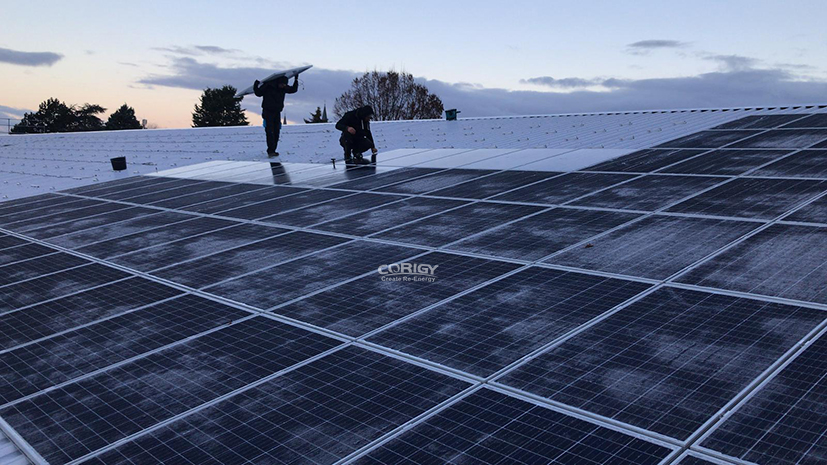
② Instalación en techo plano:
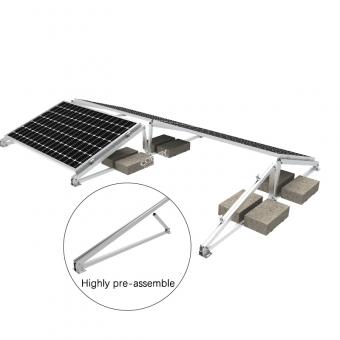
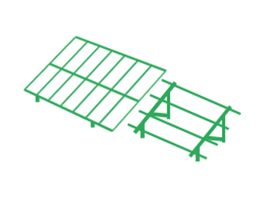
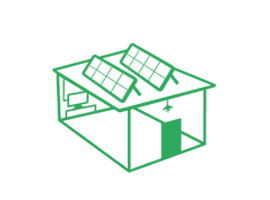
Tradicionalmente, los techos planos son comunes en edificios comerciales. La instalación de sistemas fotovoltaicos generalmente adopta un sistema de instalación con lastre (usando bloques pesados, como bloques de cemento), que puede evitar la perforación del techo.
Atención: El bloque de lastre puede comprimir la membrana impermeable. Una instalación inadecuada también puede perforar la capa impermeable instalada.
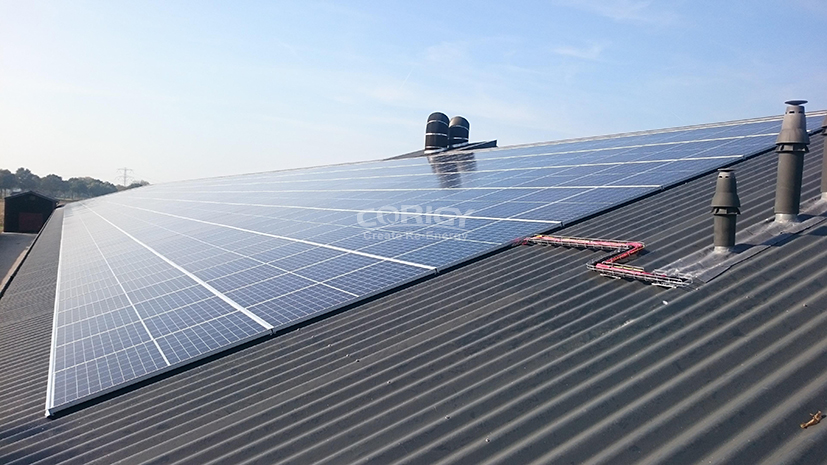
③ Techo metálico:
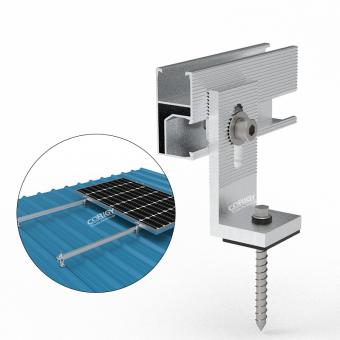
Los soportes fotovoltaicos pueden elegir sistemas de fijación siempre que sea posible para evitar perforar agujeros; aplicar sellador de doble capa en la zona perforada.
Atención: Los accesorios demasiado ajustados pueden provocar que las placas metálicas se doblen e incluso dañar la capa anticorrosiva de los techos metálicos, afectando así la estructura del techo.
Para la mayoría de los techos planos de hormigón o techos de acero, el peso de instalar sistemas de energía solar se encuentra dentro de un rango aceptable. Especialmente cuando se combina con una distribución uniforme y métodos de fijación adecuados, no causará una sobrecarga estructural. Pero para mayor seguridad y tranquilidad, todavía se recomienda prestar atención a los siguientes puntos antes de la instalación:
1. Se requiere una revisión profesional antes de la instalación:
① ¿La estructura del edificio tiene más de 20 años? Si es una vivienda antigua, se recomienda organizar una inspección por parte de un técnico estructural para revisar la capacidad de carga y el estado de envejecimiento del techo.
② ¿Cuál es el material del techo? Los techos de hormigón son los más estables, las placas onduladas de acero necesitan refuerzo mediante un diseño de fijación, y los techos de tejas deben prestar atención a la estanqueidad y a las posiciones de perforación de la estructura de acero.
③ ¿Alguna vez ha sido cubierto o tiene una estructura especial? Es necesario evitar dañar la capa impermeable original o aumentar la carga local durante la construcción.
④ Prueba de carga: Verificar la carga del techo y la carga de nieve/viento del dispositivo fotovoltaico.
⑤ Inspección de impermeabilidad: Pre-inspeccionar y reparar las capas impermeables agrietadas.
⑥ Análisis de sombras: Evitar pérdidas de eficiencia causadas por sombras y reducir daños térmicos locales.
2. Elegir el plan de instalación adecuado
① Techo inclinado: Es mejor utilizar clips/ganchos para la fijación; se deben usar revestimientos impermeables y sellador durante la perforación.
Techo plano: Se pueden seleccionar múltiples esquemas de lastre. Preste atención a proporcionar una capa protectora debajo del lastre.
Techo metálico corrugado: Se recomienda utilizar accesorios especializados con presión moderada; inspeccione regularmente el recubrimiento anticorrosivo.
3. Mantenimiento continuo y control de riesgos
① Inspección periódica: Compruebe si el soporte está suelto, si el sellador está dañado o si el cable está desgastado; especialmente antes de la temporada de lluvias, realice una inspección de impermeabilidad.
② Limpieza: Retire el polvo/nieve acumulados para evitar una tensión desigual.
③ Monitoreo del rendimiento: Instale registradores de datos para detectar cualquier anomalía eléctrica o estructural.
En resumen, seleccionar fabricantes cualificados, realizar un diseño de ingeniería adecuado y llevar a cabo evaluaciones estructurales previas a la-instalación, los paneles solares no solo no dañan el techo, sino que también pueden mejorar el efecto de sombra del techo y prolongar la vida útil de la capa impermeable deltecho’sucapa impermeable. Como proveedor de sistemas de instalación fotovoltaica con más de15años de experiencia, CORIGY puede proporcionar diversas soluciones de instalación en techos, incluidas soluciones con ganchos para techos inclinados, soluciones con abrazaderas para techos metálicos y soluciones de lastre para techos planos. Puede visitar nuestro sitio web oficial para consultar casos relacionados.
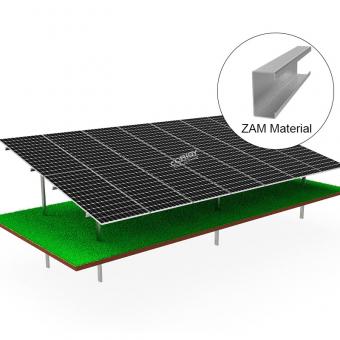
Principalmente hecha por acero galvanizado, anodizado el aluminio y el ZAM materiales
Suministrar servicio del OEM y accesorios. No cantidades limitación, y libre de las muestras si usted necesita
Install solar panel on the metal roof by standing seam, klip-lok, L foot or other clamps.
Adecuado para el azulejo de techo, techo de chapa y cubierta plana etc
Totalmente independiente de la fuente de alimentación externa, adecuado para áreas sin acceso a la red
Sistema de generación de energía solar de alta eficiencia y ahorro de costos

CORIGY SOLAR , 11 años de experiencia en la investigación, fabricación y venta de solares, sistema de montaje. Siempre estamos tratando de brindar el mejor apoyo para usted, incluyendo la rapidez de respuesta, costos, control de calidad, de diseño, de apoyo al distribuidor.
Correo electrónico
sales@corigy.comTeléfono
0086-592-6883200Ubicación
No.893,Haicang Avenue,Haicang District,Xiamen City,China.

 Red IPv6 compatibles
 español
 English
 한국의
한국의